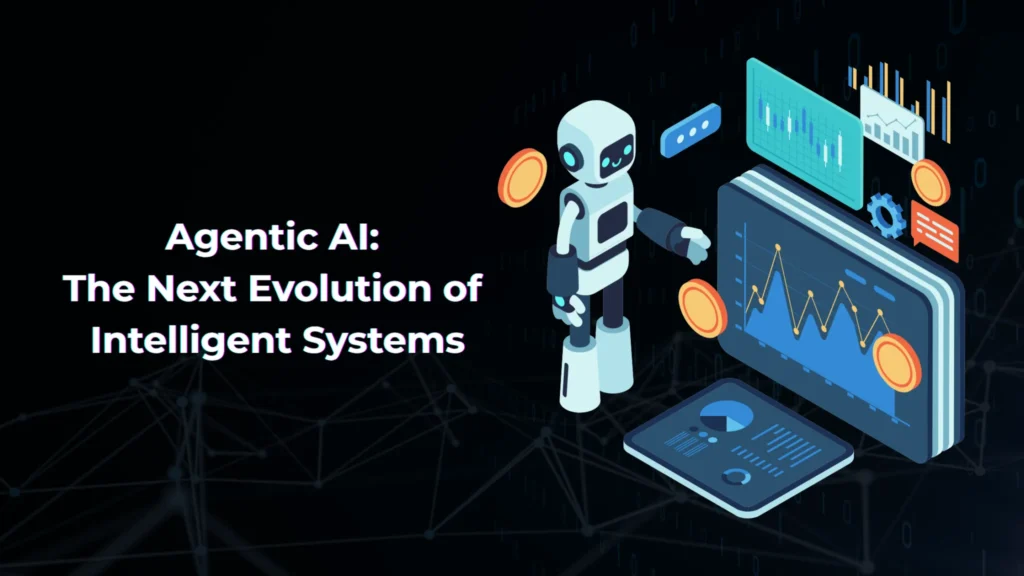
Artificial Intelligence is rapidly evolving from passive systems that respond to prompts into active systems that can plan, decide, and take actions independently. This shift is driven by the rise of Agentic AI—AI systems designed to operate autonomously, pursue goals, and interact dynamically with their environment.
Unlike traditional AI models that require constant human input, agentic systems can break down complex tasks, make decisions, and execute multi-step workflows with minimal supervision. This makes them highly valuable for enterprise automation, decision intelligence, and complex problem-solving.
In this blog, we explore what Agentic AI is, how it works, key components, enterprise use cases, and best practices for implementation.
What is Agentic AI?
Agentic AI refers to AI systems that act as autonomous agents capable of understanding goals, planning actions, executing tasks, and adapting based on feedback. These systems go beyond simple prediction or generation—they operate with intent and continuity.
Instead of responding to a single query, an agent can handle an entire workflow. For example, rather than just answering a question, an agent could research information, analyze options, generate a report, and even trigger actions in connected systems.
This makes Agentic AI particularly powerful for enterprise environments where tasks are multi-step, dynamic, and decision-heavy.
How Agentic AI Works?
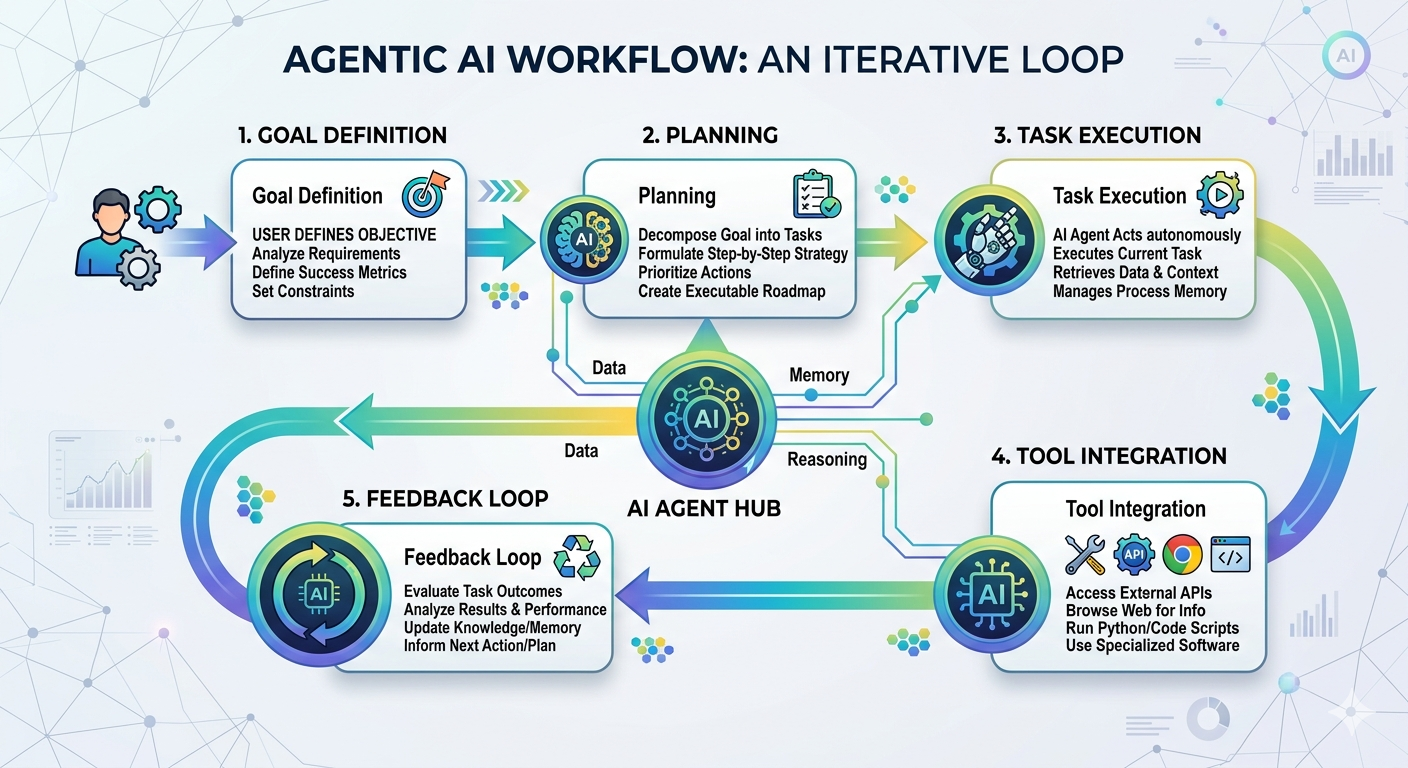
Agentic AI systems are built by combining large language models with planning, memory, and tool integration capabilities. These components enable the system to function like a digital operator rather than a static model. A typical agent workflow begins with a defined goal. The agent then breaks this goal into smaller tasks, determines the sequence of actions, and executes them step by step. During execution, it can access external tools such as APIs, databases, or enterprise systems.
As the agent progresses, it evaluates outcomes, adjusts its approach if needed, and continues until the objective is achieved. This iterative loop of planning, acting, and learning is what differentiates agentic systems from traditional AI.
Today Technology has gone too far. It is ever-evolving with new dynamic features in every walk of life. Especially, the fintech industry is on the verge of taking over an entirely new look with features like cryptocurrency and its global market.
Besides the Bitcoin currency, Blockchain has many applications for the Fintech industry. By offering a decentralized and immutable platform, Blockchain has transformed the Industry at a very rapid speed in the last few years.
Internet Soft, a software development company in California, can provide many enterprise Blockchain solutions with customized approaches and techniques for all customers. We have a pool of expert Blockchain developers for various projects on a global level. For more information and inputs, contact us today.
Blockchain refers to a decentralized digital ledger gadget that facts and verifies transactions across multiple computer systems.
The way facts are stored, tested, and shared across a network of computers is completely converted by using blockchain, a digital ledger that is both decentralized and dispensed. It functions on a peer-to-peer network, granting every player access to a complete replica of the ledger. The period “blockchain” particularly pertains to the organization of data, with facts prepared into blocks that include lists of transactions, all interconnected in a chronological series. Facts integrity is guaranteed through the use of cryptographic hashes, which make certain immutability.
The usage of consensus algorithms, like proof of labor and evidence of Stake, permits individuals to reach a consensus on the validity of transactions without the need for a central authority. These algorithms play a crucial role in maintaining the safety and agreeing with the blockchain by ensuring that only legitimate transactions are protected. It’s vital to observe that blockchain generation extends a ways past the area of cryptocurrencies, finding programs in diverse sectors together with supply chain management, healthcare, finance, or even vote-casting structures.
The Future of Agentic AI
Agentic AI represents a significant step toward more autonomous and intelligent systems. As models improve and integration capabilities expand, agents will become more capable of handling increasingly complex tasks.
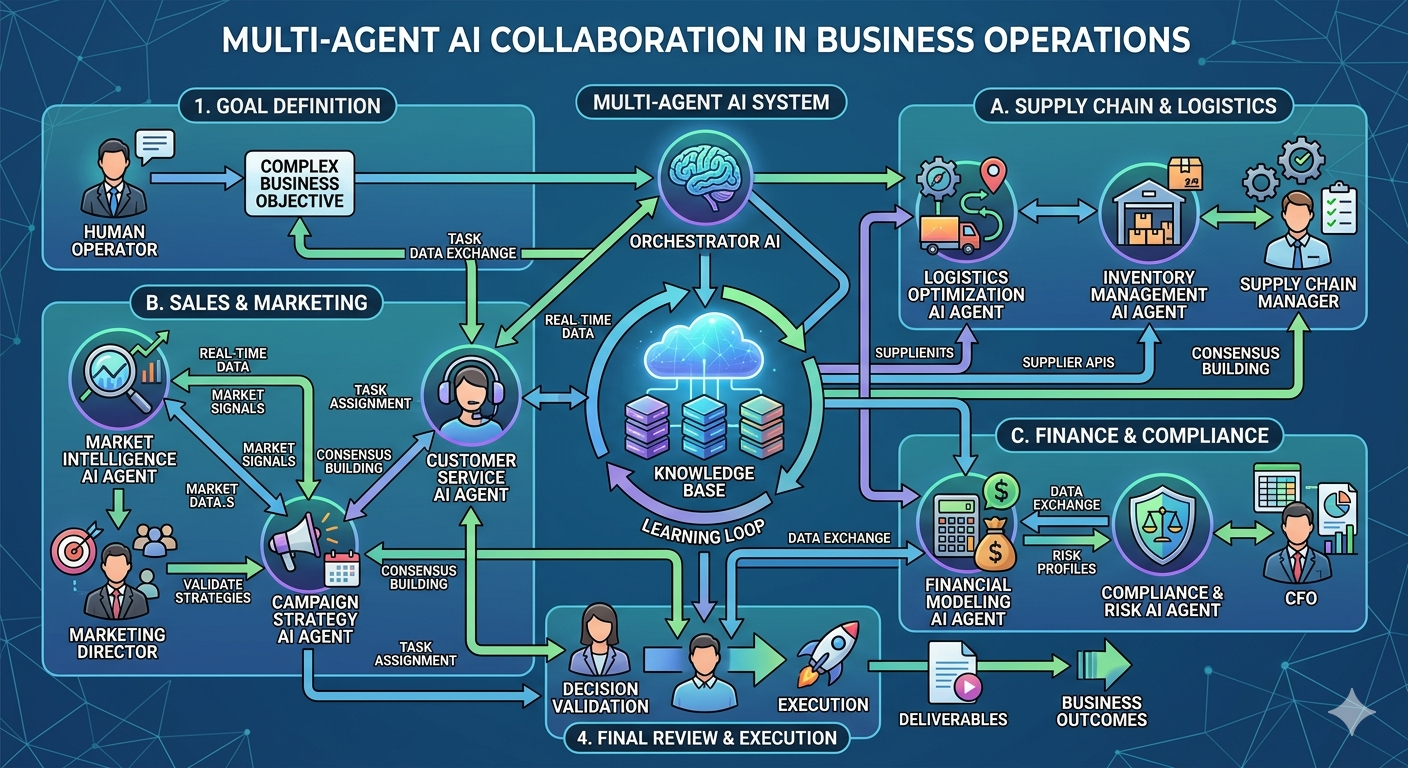
Future developments will likely include multi-agent systems where multiple AI agents collaborate to achieve shared goals. These systems will enable even more sophisticated workflows and decision-making capabilities. We can also expect deeper integration with enterprise platforms, enabling seamless automation across entire business ecosystems.
As the technology matures, Agentic AI will become a core component of enterprise AI strategies, driving productivity, efficiency, and innovation.
Conclusion
Agentic AI is transforming artificial intelligence from a reactive tool into an autonomous system capable of planning, decision-making, and execution. By enabling end-to-end workflow automation, it offers significant opportunities for enterprises to improve efficiency, reduce costs, and scale operations.
However, successful adoption requires careful planning, strong governance, and robust system design. Organizations that approach Agentic AI strategically—balancing autonomy with control—will be best positioned to unlock its full potential and build the next generation of intelligent business systems.
Explore our AI/ML services below
- Connect us – https://internetsoft.com/
- Call or Whatsapp us – +1 305-735-9875
ABOUT THE AUTHOR

Abhishek Bhosale
COO, Internet Soft
Abhishek is a dynamic Chief Operations Officer with a proven track record of optimizing business processes and driving operational excellence. With a passion for strategic planning and a keen eye for efficiency, Abhishek has successfully led teams to deliver exceptional results in AI, ML, core Banking and Blockchain projects. His expertise lies in streamlining operations and fostering innovation for sustainable growth